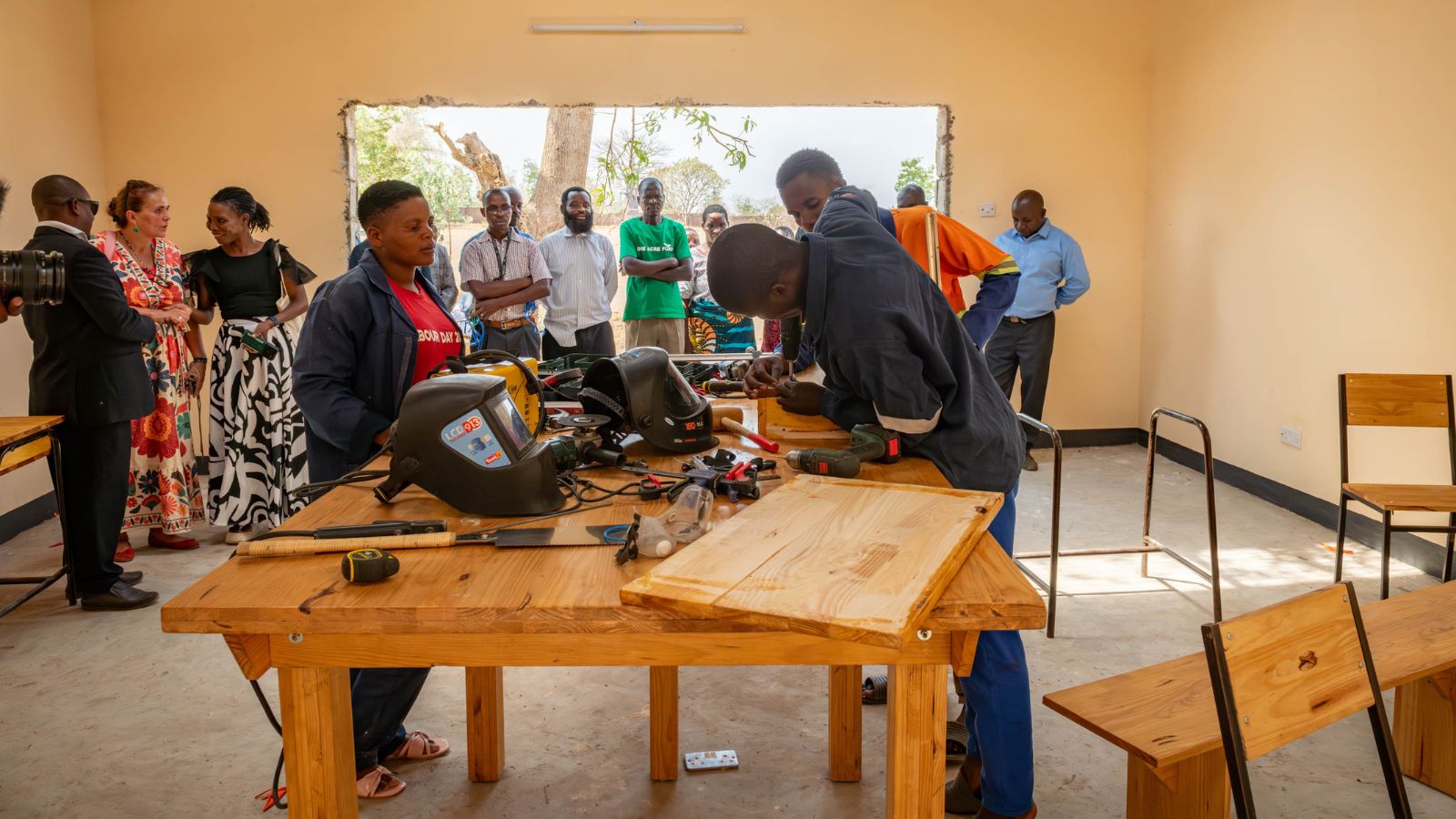

There is a smell of wood in the workshop at Christian Liebig Secondary School. Tools are laid out, and the first pieces of furniture are being made or repaired. What was little more than an idea not long ago is increasingly taking shape on the school grounds: a place where pupils can work with their hands and where the school will eventually be able to fulfil orders itself.
The workshop is not intended simply as a place for individual projects that repeatedly rely on new donations for materials and tools. Instead, the CLSS workshop is now set to become a small business in its own right.
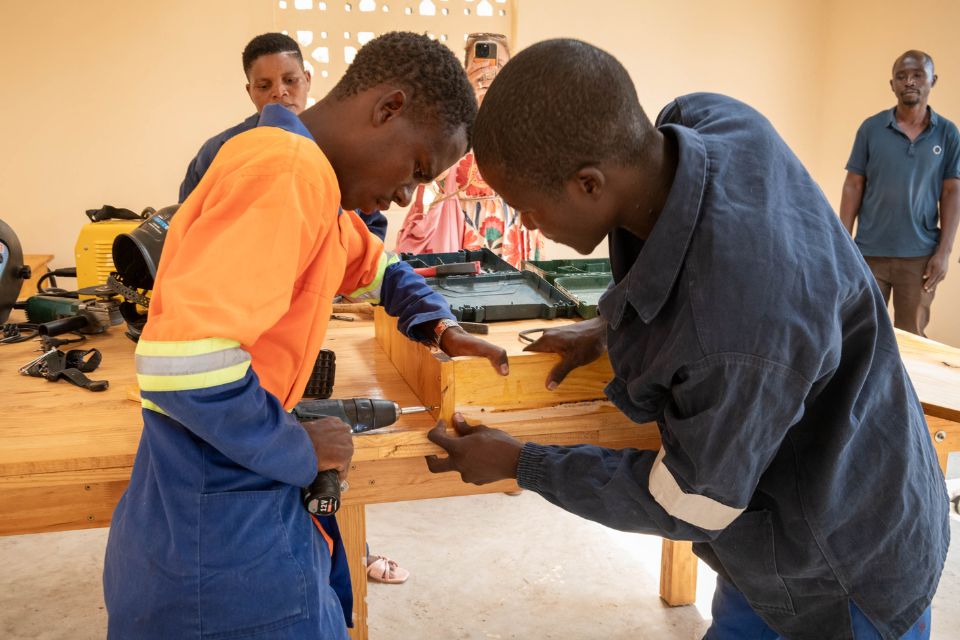
Work is well under way in the CLSS workshop.
Until now, donations have covered individual expenses: timber, nails, tools and labour. For every bench, table or repair, the costs and who would pay them had to be worked out afresh. This approach is now set to change.
In future, the school will set fixed prices for furniture and repairs. These will cover not only timber and screws but also labour, wear and tear on tools, and other costs. The Christian Liebig Foundation will no longer fund individual items. Instead, it will order specific products or repairs for schools that need them and pay the fully costed price.
This changes the school’s role. Rather than simply receiving support, it will be offering a service of its own.
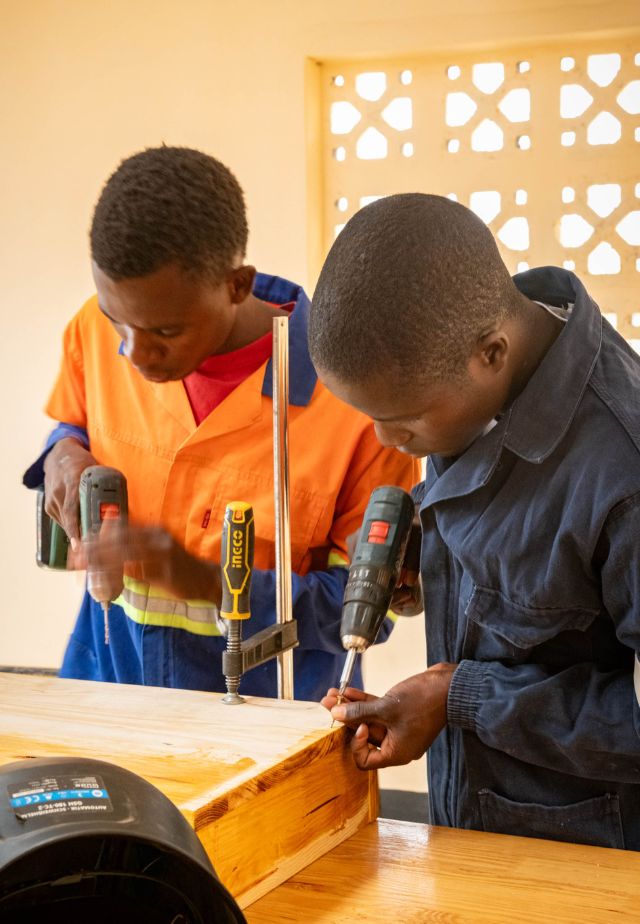
Two young men repairing school furniture.
The need is clear. School benches and tables take a lot of wear and tear. They break, need mending or have to be replaced. If this work can be carried out at CLSS itself, it will save transport, time and money.
But the idea goes beyond the school itself. Many other schools also need simple, sturdy furniture. They, too, regularly need repairs or new benches and tables – work that the CLSS carpentry workshop could take on. This would save money and resources.
This would turn the workshop into a source of income for the school. The money would stay locally and could be used for new materials, tools and lessons.
The workshop is intended not only to produce furniture but also to strengthen practical teaching at the school.
If the school earns income from orders, it can use that money to buy materials for practical lessons, maintain tools and run workshops. Pupils could work on small projects of their own after regular classes, learn to use tools and discover how planning, materials and practical skills can come together to create something useful.
This hands-on experience is particularly valuable. Measuring, sawing, sanding and assembling things teaches skills in a different way from classroom lessons. It calls for precision and patience – and produces a tangible result pupils can hold in their hands.
To ensure that the workshop does not depend on any one person, much of the work is now being documented. Costings, materials lists, technical drawings and workflow plans are being prepared for the products. This makes it clear what is needed, how the work should be carried out and what the costs will be.
That makes the workshop more reliable. New skilled workers can join, existing knowledge is preserved and procedures can be passed on. What began as improvised support is gradually developing into a structured operation.
This work is not finished yet. Prices are being reviewed, products planned and procedures defined. But the direction is clear: step by step, the workshop should become financially self-sustaining.
For CLSS, that means more than repaired tables and benches. It means practical education, its own income and greater independence.
Photos: Affonso Gavinha